A company based in Terrebonne, Quebec. Growing since 2007!
For nearly 20 years, we have supported businesses throughout their commercial signage process. We have developed and designed more than 25,467 projects.
Event Marketing Is Useless If You Make One of These 3 Mistakes

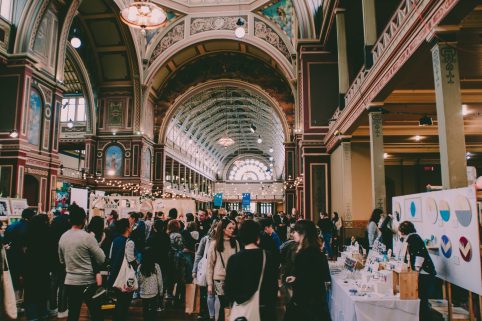
The main strength of event marketing compared to traditional marketing is bringing supply and demand together in the same place. Trade shows and exhibitions are golden opportunities to get to know your clientele and develop new business opportunities.
However, some companies overlook important aspects of their strategy, making their presence ineffective by making one of these 3 mistakes:
- Poor definition of the target clientele
- Nonexistent prospect attraction strategy
- Neglecting customer follow-up after the event
Participating in a trade show or exhibition is an investment for a company; therefore, avoid these mistakes to maximize your presence.
Get to know your clientele, invite your prospects to visit your stand at the show, have a real attraction strategy, collect data on your target clients, gather contacts, reengage hesitant prospects, make appointments…
In short, avoid the following 3 mistakes and your participation will be a success!
Mistake 1: Poor Target Clientele Definition
Developing event marketing strategies can prove to be an excellent investment for your company. Integrating this type of marketing into your overall action plan should be considered.
Despite the all-digital age, professional events remain excellent opportunities for networking, partnerships, and growth for all participants. They are spaces where you can engage directly with your target clientele. But you still need to meet them!
Event marketing will be ineffective if you don’t properly target your prospects.
Your participation in an exhibit or trade show won’t yield the expected success if the intended audience isn’t present.
Pre-Event Market Study: Determine your target clientele before participating in an exhibition
It’s important to know your clientele. If your company is already established, you should know your target clientele. Depending on your goals, you may refine or redefine the type of clients you want to meet at a business event.
Is the goal to:
- Strengthen ties with existing clients and reinforce the company’s reputation?
- Expand your clientele?
- Enter new markets?
Based on the answers, determine a typical client profile.
Determine your target audience: What client characteristics should be identified?
- Age
- Education level
- Professional situation
- Family situation
- Interests
- Place of residence
- Values
- Motivations
- Consumption habits
- Income
- Any other indicators highlighted in your market study
Note that clientele characteristics will differ if you are in a B2C (Business to Client) or B2B (Business to Business) model.
Once you have targeted your clientele, ensure you meet them by participating in the right events.
Meet your target clientele at a business event
Choose the event you want to attend
To select the ideal event to attend, research existing exhibitions.
Check our list of exhibitions in Montreal this year for an overview of all types of events happening in the metropolis.
Trade show organizers have detailed statistics on visitor profiles. They gather valuable information year after year about the nature of their visitors and are the first database to consult.
Request to obtain these statistics to ensure that your sector’s target clientele will be present.
Usually, there is already at least one reference show with well-established reputation in your field of expertise. These shows attract an already substantial qualified audience.
Now it’s up to you to evaluate which strategy to implement when choosing your show.
Define your participation strategy
You can choose to attend must-see shows with high attendance. But high attendance also means strong competition and a broader audience.
Consider a more targeted strategy as an alternative. It’s better to reach 100 people of which 2/3 match your target than 500 of which 9 out of 10 won’t be interested in your product or services.
For example, if you are a manga comic distributor, attending a manga-dedicated fair might be more profitable than participating in an event like the Japan Expo, which encompasses a very broad audience.
Lastly, the reverse is equally true. In highly specialized fields, niche competition will be very present. If your show is broader and you’re the only one in your sub-category with a booth, you’ll directly target your audience without worrying about the 10 neighboring competitors offering exactly the same service.
For instance, if you’re the only deli vendor at the organic agriculture show, you might have more success than if you were a deli vendor at the agriculture show. Among your competitors, visitors will only see the price difference, and you’ll be the most expensive.
In a show where the audience already adheres to organic, being the only one with a deli stand can be very profitable.
You can determine which strategy to adopt based on your budget, objectives, and target clientele.
Mistake 2: Not Having a Client Attraction Strategy
Choosing your show is an important step, but the preparation work is far from over! One of the most common mistakes is neglecting pre-event marketing. Make sure your prospects are in attendance.
Attraction strategies aren’t limited to the preparation period. You must also stand out during the event: have a booth that gets noticed, prepare demonstrations, engage visitors, etc.
Communicate before the event to attract prospects
Don’t neglect promoting your participation. Even if part of your target clientele will be present, you want to attract as many people as possible to your booth to maximize your presence and investments.
Today, thanks in part to social media, it’s possible to execute highly targeted advertising to reach your prospects.
Attract prospects via social media
Social media is indispensable today in any event marketing strategy. Platforms like LinkedIn, Facebook, Twitter, and Instagram allow direct access to potential partners or clients. Facebook databases can help generate profiles to whom you can send targeted advertising to promote your event.
Running contests during the trade show via Instagram can also be very profitable. For example, everyone who tags the company or publishes with a given hashtag is entered into a draw.
A few weeks before a trade show:
- Announce your presence in a newsletter
- Create an event via a professional Facebook page or publish a post to announce your participation
- On LinkedIn, target those who will be present at the event and send them a connection invitation
- Write an article on LinkedIn to announce your presence, the products offered, the demonstrations, etc.
- Make an Instagram publication: D-8 for example, to spark your followers’ interest in the upcoming event
Newsletters: Inform your subscribers of your participation
Digital marketing can be used to send messages to your clients’ mailboxes. This is called email marketing.
However, be cautious because email marketing is regulated by Canadian law and you cannot contact people without having obtained their prior consent. This is considered SPAM and is subject to penalties.
People who are subscribed to your newsletter already have an interest in your products or services. They subscribed out of attraction to your brand or in exchange for a promotion. If you have established a newsletter strategy, you have a database at your disposal: it’s a very good way to inform your subscribers of your presence at a show and invite them to participate.
Send personalized invitations
Even though writing newsletters and automated emails aims to become more personalized, it often remains very generalistic, and their “mass send” tone is often noticeable.
Here are some recommendations when writing emails for your subscriber list:
- It’s better to write private messages to your key clients
- Reserve personalized invitations for your key prospects or clients by providing them with entries to the trade show
- Use this contact to organize a meeting with them during the event
Organize contests and demonstrations, participate in conferences
Don’t hesitate to optimize your presence at the show by expanding your actions:
- Invite visitors for product demonstrations
- Organize contests to collect visitors’ data
- Offer promotions
- Give conferences
- Plan meetings or business lunches during the trade show
Make Your Booth Stand Out Among Competitors
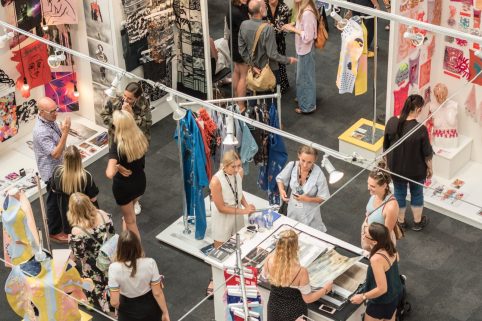
A trade show is a place where competition is everywhere and visitors are saturated with information. Be bold, stand out both in your booth design and your employees’ attitude:
- Have a booth built in your company’s colours, be creative! Visitors must recognize your brand image
- Have a strategic location
- Train your employees: They need to be welcoming and efficient.
- Plan activities and demonstrations that will increase your stand’s attractiveness
Mistake 3: Neglecting Post-Event Marketing and Not Optimizing Meetings
The trade show has passed, you’ve achieved your goals, met numerous prospects and clients… Meetings even exceeded your expectations! You feel you have many potential clients and overconfidence leads to the mistake: too many companies neglect their follow-ups, and in doing so, see poor returns on investments after a trade show.
Optimize all your meetings! Gather information on your clientele, be curious about their expectations and desires. Use this event to improve yourself as well.
Trade Shows, An Opportunity to Collect Data on Your Clientele
Trade shows are places where you can be directly in contact with your clientele. They are ideal places to learn about your target.
Data collection is a tool that can be very useful in improving your offer. But you must know the reasons behind this data collection and also sort visitors into categories based on their potential.
Define precise objectives to direct this information collection towards concrete indicators. Depending on the objectives, ask yourself the following questions:
- What topics to ask clients about?
- Which indicators to watch?
- What client data does the company need?
- What will be the data collection device? (form, discussion, etc.)
Use these meetings to enroll visitors in your newsletter and stay in touch with them.
Perform Follow-Ups and Reengage Prospects
Don’t let your new contacts remain idle. Follow up with them quickly.
If you didn’t obtain appointments during the show, now is the time to do so and turn meetings into concrete opportunities:
- Classify your prospects in order of importance: Prioritize those who expressed a need for a short-term project, those who seemed close to buying. Secure an appointment quickly if it’s not already done.
- Thank all your visitors: A week after the show, thanking all your visitors via email will keep you in their thoughts, whether they were convinced by your services or not.
- Reengage less convinced prospects: Many factors can influence purchase decisions. Overwhelmed with solicitations during trade shows, hesitant visitors may change their minds after reflection. Don’t hesitate to contact them again to make a new offer or understand their initial reluctance.
You’ve understood, event marketing is effective. It can be a powerful tool in developing and growing your business. If you avoid these mistakes and you’re well prepared, your next trade show participations will be great business opportunities.