A company based in Terrebonne, Quebec, Canada. Growing since 2007!

For nearly 20 years, we have supported businesses throughout their commercial signage process. We have developed and designed more than 25,467 projects.
17 Tips to Succeed at a Trade Show
Table of contents
- 1. Define Your Trade Show Goals
- 2. Attend Trade Shows as a Visitor
- 3. Create a Preparation Calendar
- 4. Develop and Track Your Budget
- 5. Research Available Grants and Rebates
- 6. Participate in New Trade Shows
- 7. Remember the Power of Pre-Event Marketing
- 8. Focus on Exhibit Stand Design
- 9. Anticipate Problems and Have Backup Plans
- 10. Thoroughly Prepare Your Materials
- 11. Properly Prepare Attending Employees
- 12. Implement Targeted Promotions
- 13. Conduct Mini-Evaluations During the Show
- 14. Collect as Much Prospect Information as Possible
- 15. Follow Up with Met Prospects
- 16. Do a Thorough Post-Show Review
- 17. Measure Return on Investment

Preparing for a trade show can be highly stressful for exhibitors. You want to make sales, leave a good impression on potential clients, and get a return on your investment. However, many businesses unknowingly commit errors that lower their chances of success. Whether it’s before, during, or after the event, a single mistake can cost us our success and destroy all our efforts!
That’s why we’ve decided to prepare a list of 17 tips for trade show participants, to make your experience a success!
1. Define Your Trade Show Goals
Goals guide our actions and show us if we’ve succeeded. It’s essential to think about what you want to achieve from participating, what you want visitors to remember about you.
After this reflection, it will be easier to set precise goals such as:
- Launching a new product
- Generating leads
- Entering a new market
- Promoting existing products
- Increasing sales
With clear and defined objectives, strategies will more easily come into focus. The rest of the preparation, from the budget to the design of your stand, will be smoother and free of major obstacles.
2. Attend Trade Shows as a Visitor
Visitors view exhibitions differently than exhibitors. As explained in an article published on Les Affaires, by stepping into visitors’ shoes, you see the event from a new perspective.
Having time to stop and observe the surroundings means several aspects become easier to notice than when confined to your stand:
- The most attractive spots
- Strategic locations
- Competitors’ strategies
- What interests visitors the most
It’s also possible to meet potential clients at the shows you visit. It’s a prime moment for a first contact and to begin the conversion process by inviting them to meet at another show or at your offices!

3. Create a Preparation Calendar
Preparation for a trade show is an extensive task that spans several months. It’s often necessary to register a year in advance to secure a good location in the hall.
To ensure nothing is forgotten and that all forms and requests are submitted on time, it’s best to have a dedicated trade show calendar. All important dates and deadlines should be noted there.
Consider including:
- Documentation to send to trade show organizers
- Orders to place with suppliers
- Payments to send to suppliers
- Training of staff attending the show
- Printing of documents and promotional materials
- Logistics for equipment transportation
Share this calendar with all team members involved, directly or indirectly, in the trade show preparation. This will avoid surprises and oversights.
4. Develop and Track Your Budget
It’s crucial to have a complete budget that includes all expenses, big and small. It’s no secret that participating in a trade show is expensive, and investment is required to reap the benefits.
However, it’s not enough to make a budget just to have one; it must be followed! The cost of attending a show can become astronomical without careful accounting and monitoring of every expense.
It’s preferable to draft this budget as a team to ensure nothing is overlooked:
- Space rental
- Transportation and accommodation
- Salaries for on-site staff
- Advertising and promotions
- Purchase or rental of the exhibit stand
- Product transportation
- Additional fees (internet, lighting, etc.)
Don’t forget that the ultimate goal of a trade show is to make profits! The only way to ensure this is by maintaining tight control over our expenses.
5. Research Available Grants and Rebates
Depending on the industry, the business’s life cycle stage, or even its size, it may be possible to receive provincial and federal subsidies or financial aid.
Professional associations also offer administrative and financial support to their members. They sometimes organize joint events where costs are reduced for members.
It’s always beneficial to research potential financial assistance, which can make a real difference in your budget!
6. Participate in New Trade Shows
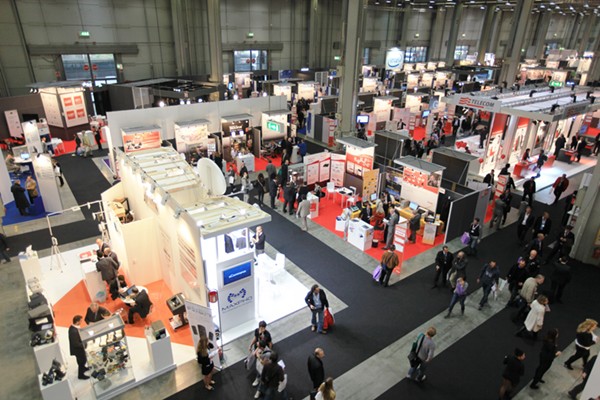
While some trade shows may be a sure thing, many businesses continually attend the same events without questioning their relevance.
By changing old habits, you may uncover business opportunities you hadn’t considered. Diversifying the types of shows attended also helps evaluate those that don’t deliver enough return on investment.
To avoid selecting a trade show at random, check where your major competitors and clients are present. You can then expect many other potential clients to be there.
For insights into the variety of possible shows and fairs, check out our list of Montreal trade shows in 2025.
It’s also possible to participate in trade shows outside your sector. Your products can be presented as complementary to those within the fair’s sector. This strategy gives better visibility since you’re not surrounded by competitors, thus reaching an entirely new target audience.
7. Remember the Power of Pre-Event Marketing
Generally, trade show visitors don’t attend with no purpose. They visit because they know certain businesses they’re interested in will be present. Therefore, it’s vital to inform prospects that you’ll be there so they take the time to come.
Certainly, you want to attract new clients, but trade shows are a fantastic opportunity to convert existing prospects into loyal customers.
Share all information about your presence across various platforms:
- Social media (Facebook, LinkedIn, Instagram, etc.)
- Company website
- Newsletter
- Employee email signatures
- Client invoices
Also, send personal emails to your valued contacts and partners. It’s the perfect time to schedule a meeting with them and impress with your booth. This tactic might create unexpected new business relationships!
8. Focus on Exhibit Stand Design
Some believe that design is superficial, that product presentation is all that matters. While it’s the heart of your trade show participation, your well-prepared presentation will do no good if your booth doesn’t attract anyone!
Using various graphic elements can convey your message to potential clients more effectively:
- Textures
- Colours
- Images
- Fonts
This message must be simple to understand at a glance: visitors are exposed to numerous stimuli and don’t linger long on each stand.
To have a booth that displays a message consistent with our brand image and stands out without clashing with the decor, it’s advised to work with professional exhibit stand designers.
9. Anticipate Problems and Have Backup Plans
Our greatest fear: something unexpected happens and jeopardizes our success at the trade show. The only way to prevent this is by anticipating potential issues and having backup plans.
Numerous problems can arise during a show, and solutions can be found for each:
- Defective internet connection: have documents stored on the computer, not requiring internet
- Staff falls ill: designate a backup employee to come in case of emergency
- Booth not meeting hall or trade show standards: work with an expert who ensures everything is compliant
- Defective power outlet: bring extension cords and power strips; you might be able to plug in elsewhere!
Make a list of everything that could potentially go wrong and find alternative solutions for each problem.
The more experience you have in trade shows, the easier it will become to identify potential problems and make relevant backup plans.
10. Thoroughly Prepare Your Materials
Preparing materials for the event is often left to the last minute. This is a grave mistake! Promotional materials can determine whether you close a sale or not. They can’t be hastily done!
Different promotional materials to prepare include:
- Promotional videos
- Brochures
- Samples
- Promotional products (pens, reusable bags, etc.)
- Forms to gather client information
These materials also help reinforce the message you want to convey to potential clients, while solidifying your brand image. By ensuring their quality, you can better define your value against competitors in the eyes of future clients.
Also, think about preparing necessary tools and accessories for the show in advance, like screws, staplers, and extension cords. The last thing you want is to run around the office looking for tape thirty minutes before departure.
11. Properly Prepare Attending Employees
Participating in a trade show is demanding both physically and mentally. Employees need preparation, without which they may lose motivation and feel overwhelmed.
Creating a preparation document containing as much information as possible can facilitate the trade show experience:
- Arrival time
- Exhibition venue rules
- Key products to promote
- Dress code
- Break times
- Employee roles
- Venue layout
- Important tasks during the show
Ensure employees have no unpleasant surprises upon arrival.
After distributing the document to relevant staff, offer a brief training session to ensure everything is well understood and no questions remain unanswered. Don’t hesitate to also train them on the products or services being presented and to practice the sales pitch with them.
Remember, a happy and confident employee will have better interactions with visitors. The company will appear organized and professional in their eyes, making them more inclined to conduct business with you.

12. Implement Targeted Promotions
Many businesses use prize draws to collect the most emails possible. This can be a good strategy if the prize is one of your products or closely related to yours.
However, if you give away a computer and sell premium health catering services, you won’t get useful contacts. People will participate just for the enticing prize, and chances are they will unsubscribe afterwards.
You want to gather emails from your target audience, meaning qualified leads! For example, a high-end catering service could offer a free meal for 10 people. Only those attracted to this service would want to sign up, and they’d be happy to receive newsletters with appealing promotions later.
13. Conduct Mini-Evaluations During the Show
Since trade shows often last several days, you can swiftly notice what works well or not and make necessary corrections in the meantime.
Here are examples of questions to ask:
- Are prospects responding as expected?
- Is our pitch tailored to the clients in front of us?
- Is one of our methods not working with customers?
- Should we be more formal? Or more friendly?
Discuss these topics with colleagues to see what can be improved and find solutions.
During these mini-evaluation periods, also observe what competitors are doing. It’s the perfect place to spot trends, new products, and strategies used by the competition.
With feedback from colleagues and client reactions, you can more easily identify issues and implement alternative solutions formerly outlined in your backup plan.
14. Collect as Much Prospect Information as Possible
Even though our primary goal is to sell, let’s not forget that everyone present at the trade show is a valuable information source on your target clientele.
Of course, planned forms are useful, but it’s what the prospect actually shares that can provide a fresh perspective. Beyond the sales pitch, take time to chat and listen to what potential clients reveal.
It’s recommended to take notes on these conversations. It can help personalize future contacts with the prospect as well as in the post-event meeting. Ensure these details are stored safely as they might be crucial in future strategic decisions.
15. Follow Up with Met Prospects
Remember, trade show visitors leave with a myriad of meetings and just as many business cards. Therefore, you must remind them of your existence and what was discussed during your often brief encounter.
By reaching out shortly after the event, you show them they matter. If you’ve followed tip #14 well, you’ll have invaluable information for more personalized contact.
For prospects with scant information further down the conversion channel, focus on post-event marketing. Send them your newsletter and try to bring them closer to the purchase process.
16. Do a Thorough Post-Show Review
With all the discussions from the show, notes taken, information gathered, and sales and orders made, it’s time to sort through this data and meet to evaluate the event’s hits and misses.
Doing this as a team, especially with employees who attended the show, lets you truly assess what went well and what needs improvement for next time. It also enables the definition of new strategies based on competitive intelligence collected at the event.
To see if goals were truly met, ensure to ask specific and quantifiable questions:
- How many leads did we generate during the event?
- What was the total sales revenue?
- On average, how many people visited the booth daily?
Remember, nobody’s perfect, and making mistakes is normal. But learning from them leads to improvement and a step closer to perfection.
17. Measure Return on Investment
As mentioned in tip #12, you could gather numerous leads but achieve no subsequent sales. Or make sales, but not enough to justify the show expense.
By measuring ROI, you ensure the show was an investment, not an expense. Even if you collect 10,000 emails, if no profit is made, reconsider the value of participating in this trade show!
Use this moment to analyze which products yielded the most profit during the event to emphasize those in future.
Applying these valuable tips will greatly increase your chances of leaving the trade show successfully!
Do you already apply these tips? Use other tactics to succeed at trade shows?